|
|
|
|
|
|
|
|
|
| |
|
|
|
|
Edgar
Allan Poe died on October 7,
1849 at the Washington College
Hospital in Baltimore. The
events surrounding his death
have remained an enigma. The
Poe Shadow constructs "an
intriguing chain of theories" (The
New York Times) using new
and definitive evidence.
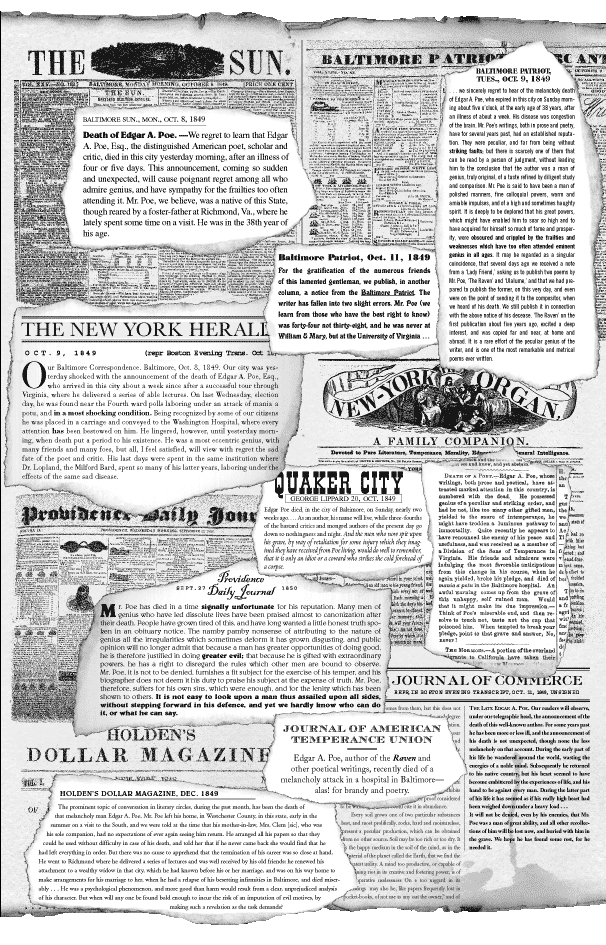
Above
is a compilation of original
obituaries and articles about
Poe's death. The New York
Herald is the most
complete obituary published, and
The Providence Daily Journal,
published about one year later,
may be the most insightful. Click
on the image above to look
more closely at the montage.
|
|
|
|
|
|
|
|
|
|
|
|
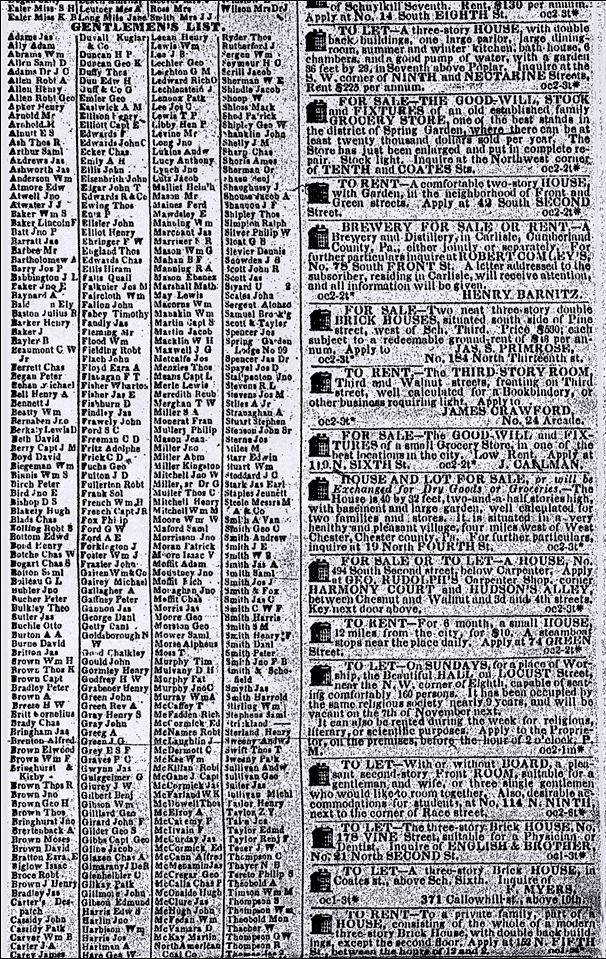
In
the weeks before his death, Poe asked his aunt
Maria Clemm to send him a letter to Philadelphia
addressed to "E. S. T. Grey." This image
above is from the Philadelphia Public Ledger
on October 3, 1849 and informs readers what
letters were waiting for pick up. Look closely
at the "Gentlemen's List" here and you will find
the name "Grey, E. S. F." -- precisely at the
same time a letter from Maria Clemm addressed to
Poe under that name would have arrived at the
post office. This was likely the last letter
sent to Poe in his lifetime. The existence of
this waiting letter has never before been known,
and this list is reprinted for the first time on
this site and in The Poe Shadow, where
its implications are explored and the reasons
why Poe used this alias in this final days are
finally revealed.
|
|
|
 |
|
|
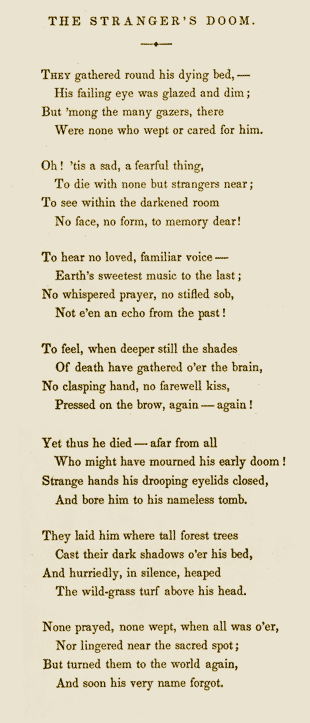
During
the last weeks of Edgar Allan
Poe's life, he had planned to
visit Philadelphia to edit a
book of poems by a writer named
Maurgerite St. Leon Loud. Poe
died, but Loud ultimately did
publish her poetry book in 1851.
Identified for the first time on
this site and in The Poe
Shadow, this document,
"The Stranger's Doom"
(reproduced at left from 1851
edition) is one of the last
poems in Loud's volume and may
be the first poem ever written
about Poe's funeral. What it
reveals about Poe's death is
uncovered in The Poe Shadow.
|
| |
|
| |
|
|
| |
|
|
|
|
|